


Luck of the Lab: LSU Research Glows Green, Spanning Brain Cells, Crops, Frogs, and Algae
March 16, 2026
In honor of St. Patrick’s Day, we bring you LSU research in every shade of green—from neurons stained with green fluorescent protein, to hardier green crops, to photosynthesizing microbes. Turns out, great science can be just as green as the holiday!
Neurons in Green
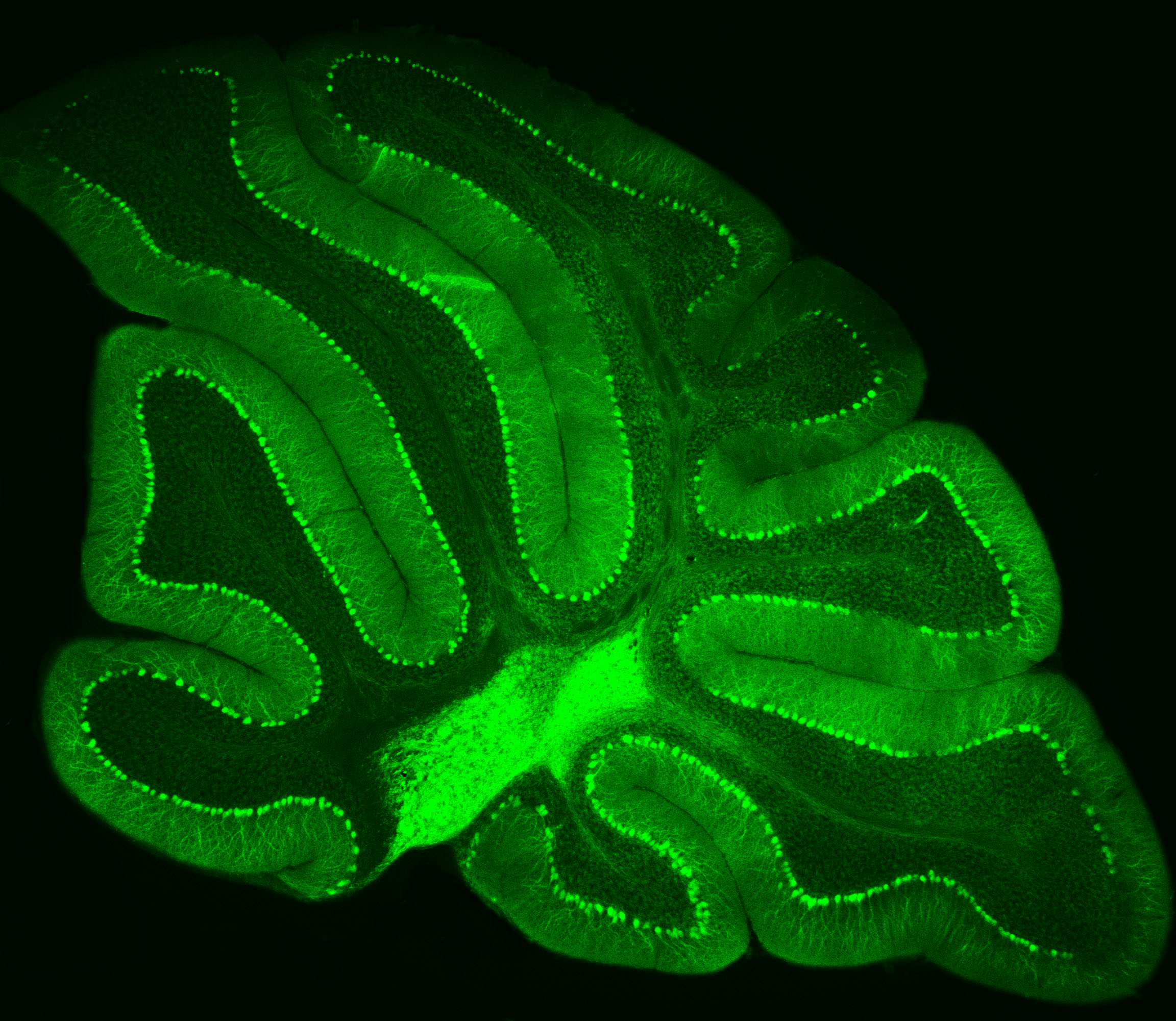
Purkinje neurons from an animal model are labeled with green fluorescent protein (GFP), which causes them to glow bright green.
– Credit: Pennington Biomedical
At Pennington Biomedical Research Center, scientists often study the brain by highlighting specific cells so they can be seen more clearly under a microscope. This technique was recently used by Dr. Yanlin He, associate professor and director of the Brain Glycemic and Metabolism Control Laboratory, who is examining Purkinje neurons in the cerebellum.
Purkinje neurons are best known for helping control movement and motor learning, but researchers are discovering they may have other important roles in the body as well, such as controlling energy balance and blood sugar.
By making these neurons glow green, Dr. He and his team can see their complex branching shapes and how they connect within the cerebellum’s neural network.
This technique also allows researchers to perform electrophysiology recordings, which measure the electrical activity of the cells in a laboratory setting. Their work could help scientists better understand how the brain helps regulate metabolism and overall health.
Helping Frogs Grow Stronger Bones
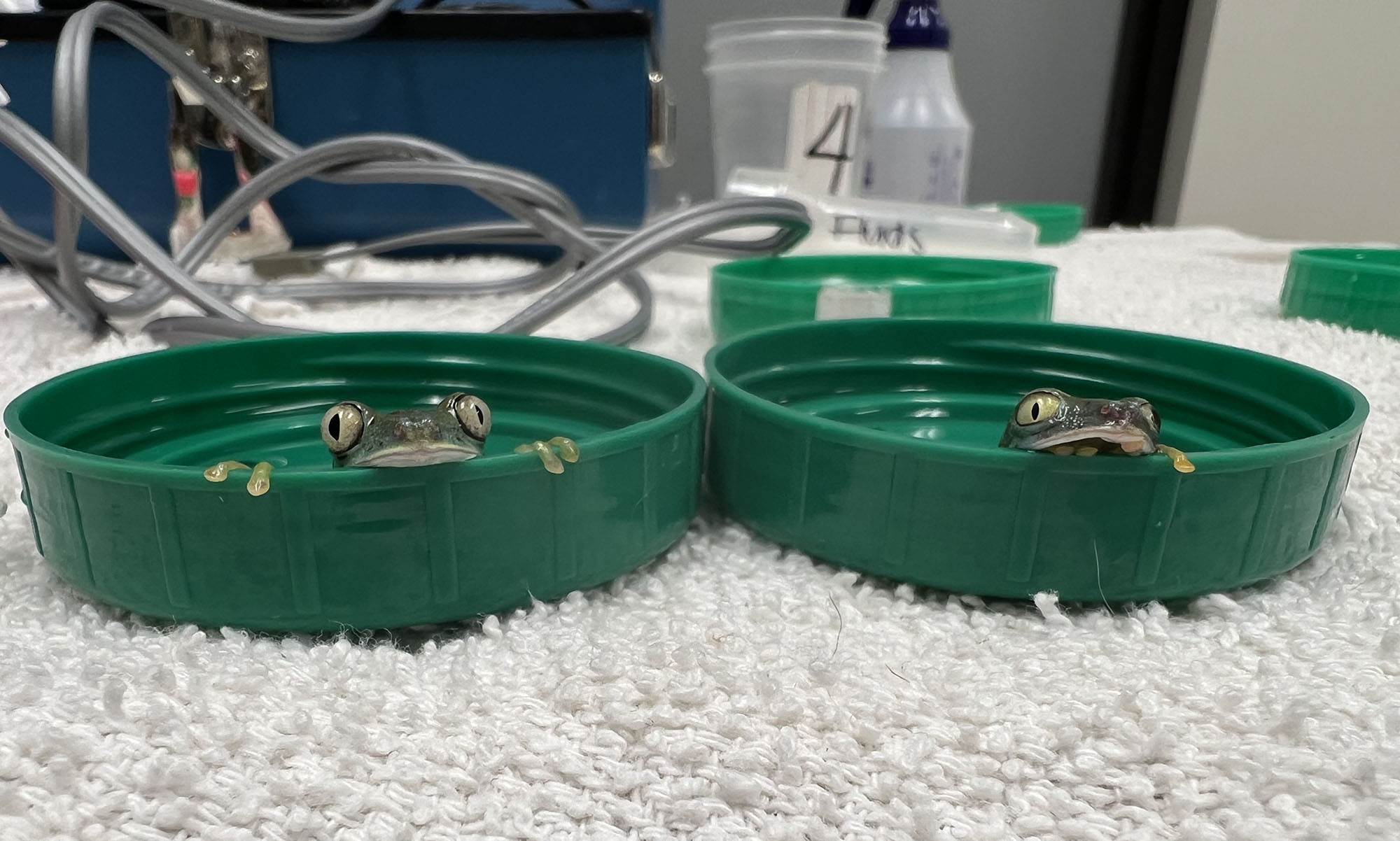
Lemur frogs awaiting their micro-CT scan
Maria Graciela Aguilar, who recently successfully defended her PhD thesis at the LSU School of Veterinary Medicine, is from Costa Rica and a lover of the lemur tree frog, a critically endangered species.
To help conserve these beautifully green amphibians, conservationists may need to maintain these frogs in protected environments in captivity. But to do so, they also need to know how to properly feed these frogs and maintain them for optimal health and reproduction.
Aguilar has been studying how much food these frogs typically eat in a day and how to ensure they get enough calcium to keep their bones strong. In a recently published study, Aguilar and colleagues used micro-CT scans of live frogs to assess bone density and whether adding extra calcium to the insects the frogs ate could improve it.
The results were promising: the frogs on the higher calcium diet had higher bone density.
“We also found that how you determine bone density was very important, something that other studies should consider in the future,” said Mark Mitchell, professor of zoological medicine at LSU VetMed and senior author on the new study.
“Most studies only take a section of bone for the image, but Graciela ended up using the whole skeleton because these frogs are so tiny. This also helps prevent errors that occur when you only select one bone that may be remodeling at a different rate than other bones.”
The study helped Aguilar and colleagues determine how best to prepare foods for these critically endangered frogs in captivity, how to most accurately measure bone density over time, and how to successfully anesthetize the frogs for scanning without harming them.
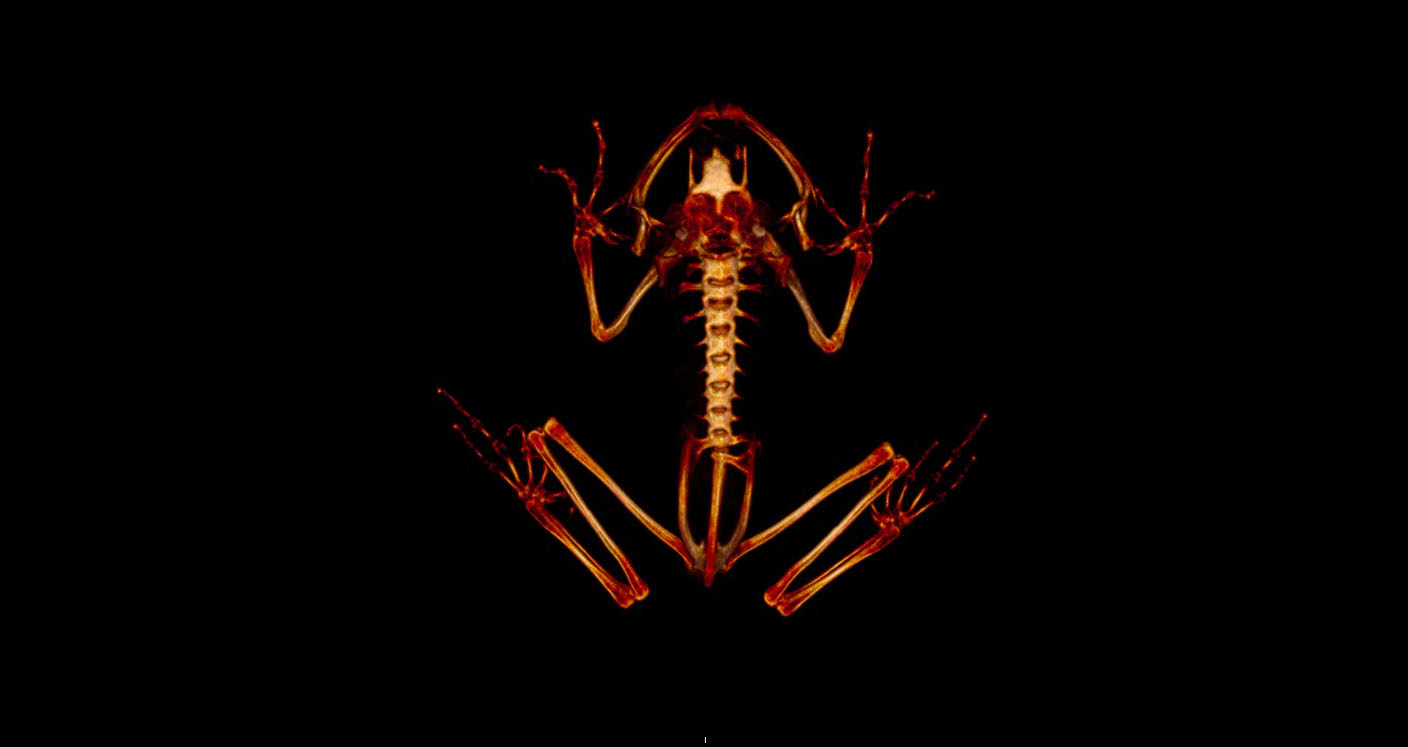
Lemur frog CT scan.
A Vision of Green: Wheat-Rye Hybrid
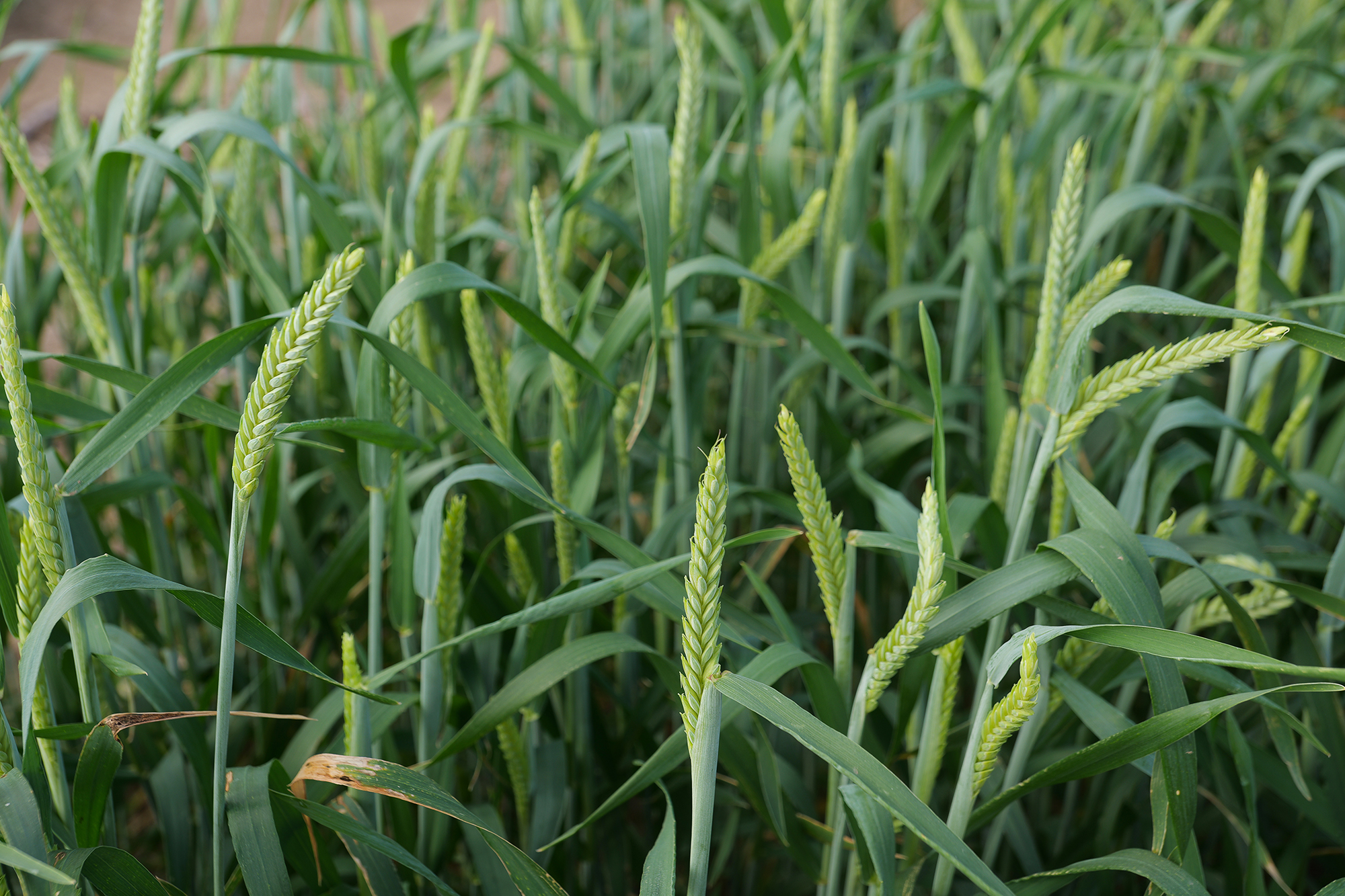
Triticale test plots at the LSU AgCenter Doyle Chambers Central Research Station in Baton Rouge.
– Credit: Olivia McClure/LSU AgCenter
Triticale — a hybrid of wheat and rye — is increasingly recognized as a high-yielding, resilient crop useful for livestock feed and bioenergy production. LSU AgCenter breeders are hoping to soon release a variety ideal for Louisiana farmers.
In their studies, the breeders have found a lot to like about triticale. Besides its weed suppression benefits, triticale has a strong root system that guards against erosion — an important characteristic for Louisiana farmers, many of whom plant their crops on raised beds that often need to be “rowed up” again before spring planting.
The roots of triticale could hold onto soil in raised beds so they don’t fall apart over the winter and during rainy seasons.
Lovely Shade of Green, Not-so-lovely Cyanobacteria
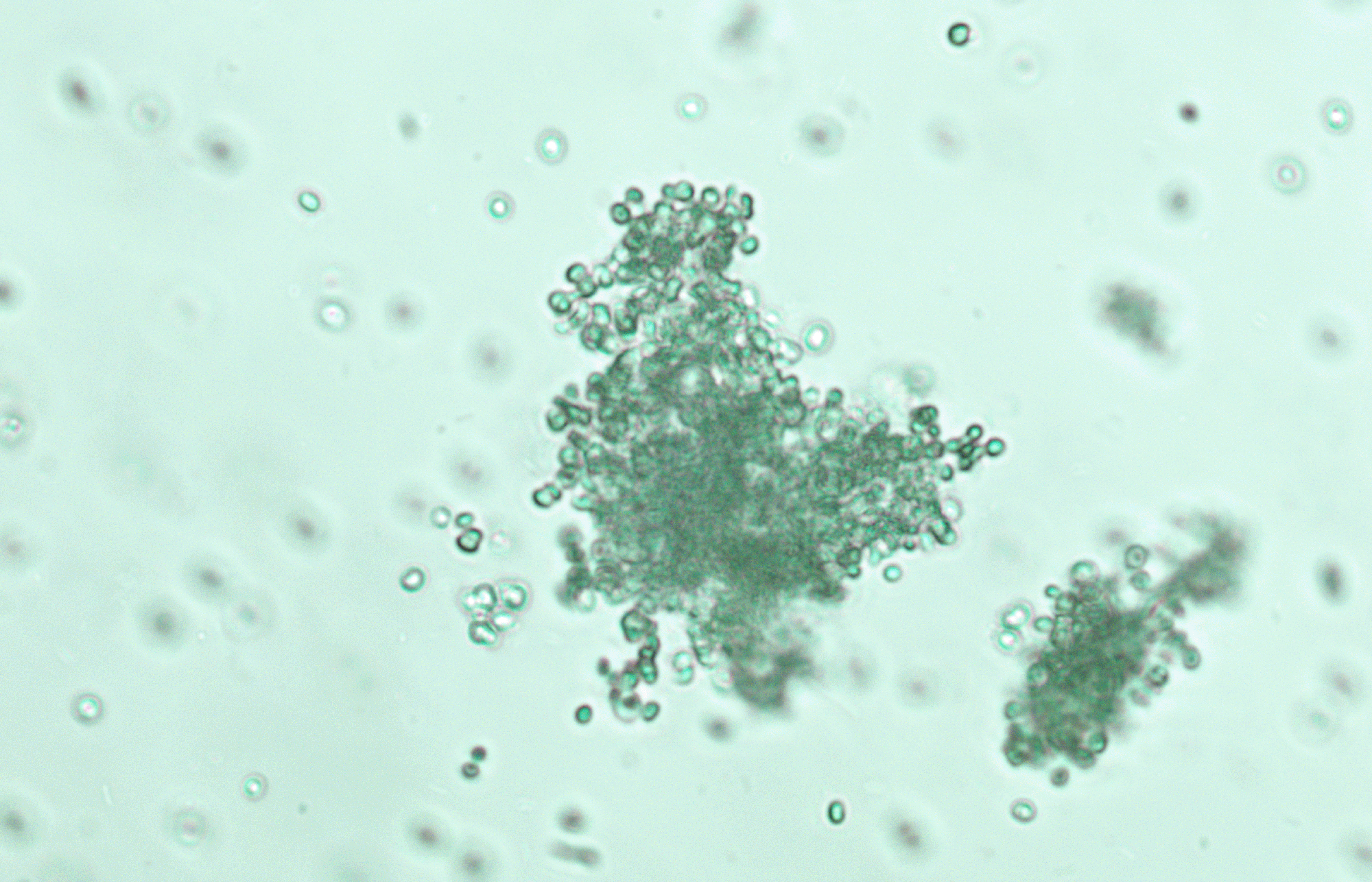
Microcystis, a potentially toxic cyanobacteria that likes to bunch up in clusters, as seen at a 200x magnification.
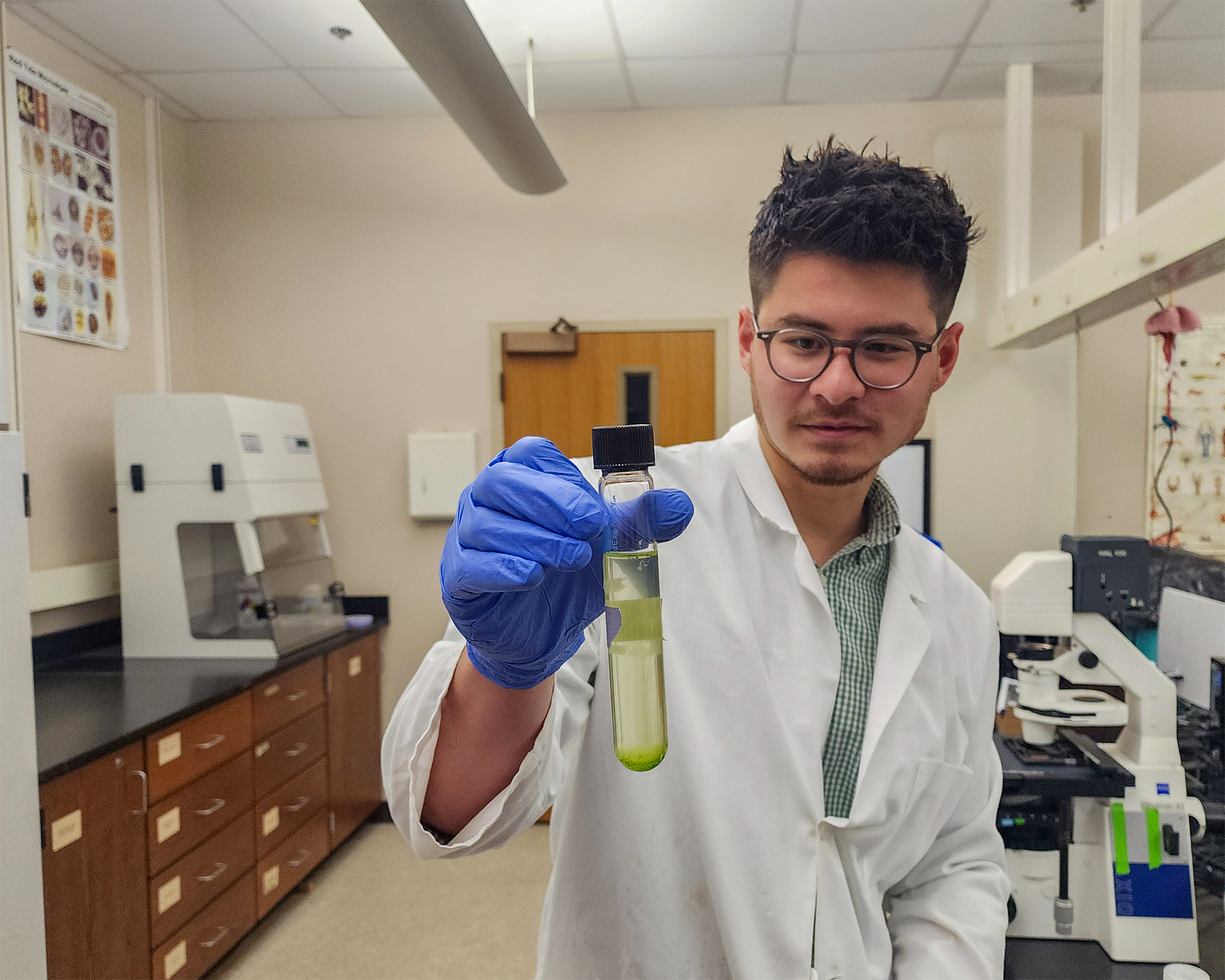
Jacob Chen holding sample.
Graduate student researcher Jacob Chen works in the LSU College of Coast and Environment’s Phytoplankton Ecology Lab with oceanography and coastal science professor Sibel Bargu Ates. The lab is trying to better understand the conditions under which Harmful Algal Blooms (also known as HABs) occur.
Harmful cyanobacteria blooms are a global phenomenon, but are especially common in calm, warm, and nutrient-rich freshwater and estuarine systems like those found in Louisiana.
These blooms can produce various potent toxins responsible for animal poisoning and human health problems. By better understanding the conditions that enable these blooms, researchers could help predict outbreaks and prevent human exposure.