


As America Turns 250, LSU Historian Aaron Sheehan-Dean Reflects on the Nation’s Past—and Its Future
June 29, 2026
As the United States marks the 250th anniversary of its independence, the milestone offers more than a chance to celebrate—it invites Americans to examine the nation's history with fresh perspective. Aaron Sheehan-Dean, the Fred C. Frey Professor of History at LSU, says the country's story is one of uncertainty, resilience, and continual change rather than inevitability. In this Q&A, he discusses the myths surrounding America's founding, Louisiana's unique place in the national story, the enduring challenges of democracy, and why the nation's semiquincentennial is as much about reflection as celebration.
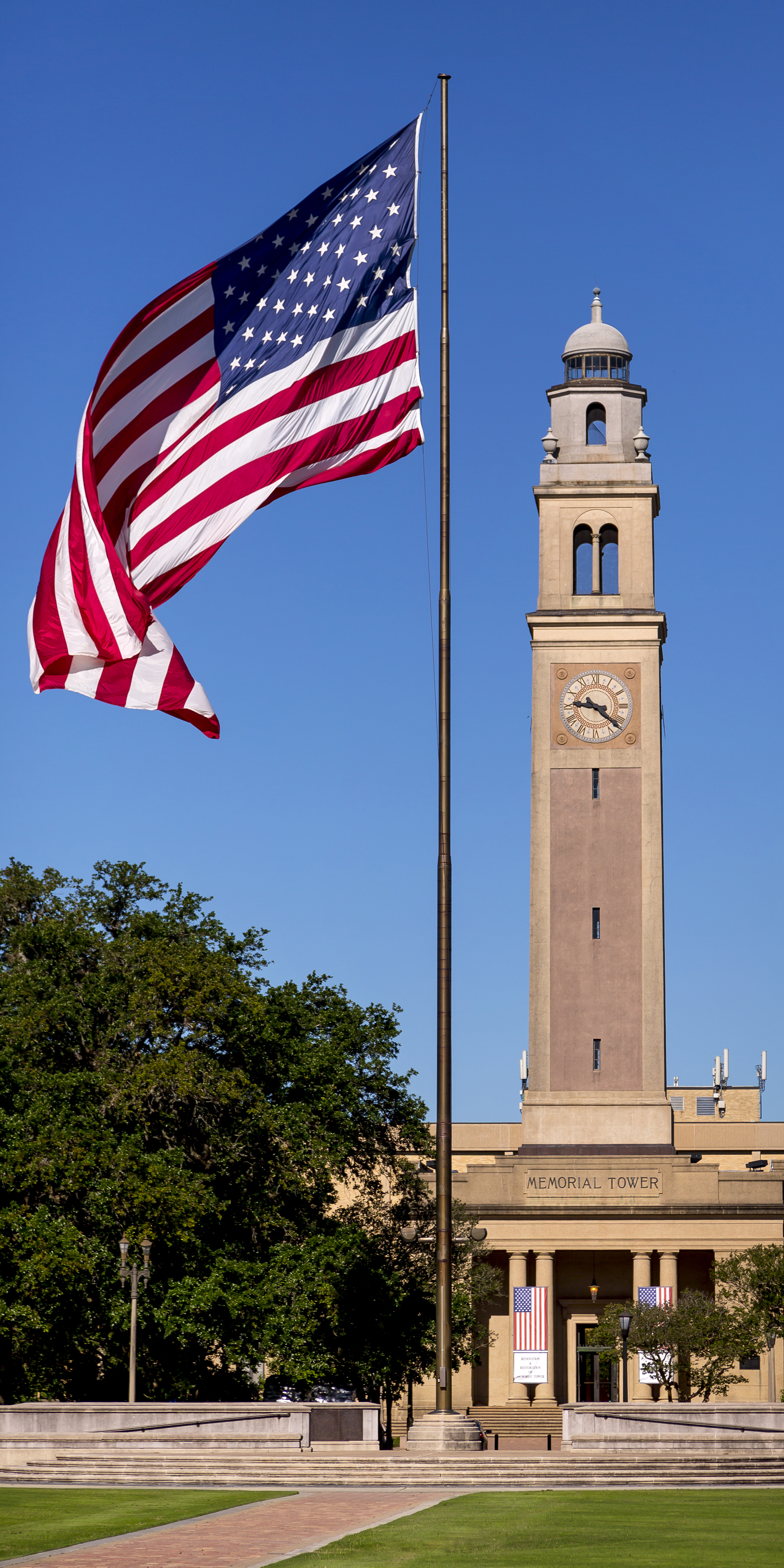
The American flag in front of LSU's Memorial Tower on campus.
Q&A
Why does the 250th anniversary of American independence matter?
Like all anniversaries, this moment gives us an opportunity to think seriously. In this case, we’re thinking and talking about the past, present, and future of the United States, which should be of concern to everyone who lives here.

Aaron Sheehan-Dean
What are some myths Americans tell themselves about the country's founding?
The most lasting and harmful myth is that the United States was destined to achieve independence and then provide a model for the rest of the world, what professional historians refer to as “American Exceptionalism.” History is the study of change over time and the one thing we can say for certain is that change is unpredictable. Nothing inevitably ensured the success of America as a country or as a democracy; people worked to make those accomplishments. It’s only by acknowledging the uncertainty of historical change that people feel empowered to take action for improving the country today.
How has Louisiana reflected both the opportunities and challenges of the American experiment?
Louisiana’s history as a place distinct from the Anglophone history of the original Thirteen Colonies reminds us that America’s story is a pluralistic and diverse one.
“ Louisiana’s history reminds us that America was built from people coming from all around the world. ”
By incorporating Louisiana, Americans brought French, Spanish, and African legacies into the national one. They added a significantly Catholic population to a predominantly Protestant world. We take that for granted today but few people did at the time. Even as our nation struggles over how to incorporate foreign-born people, Louisiana’s history reminds us that America was built from people coming from all around the world.
If the Founders could see America today, what would surprise them most?
Many would be surprised at the durability of the nation they created. Republics were fragile and untested systems in the 18th century, especially on the scale of the U.S., so our perseverance might be the first thing they noticed. Second would be the degree to which democracy itself has changed. At the nation’s founding, voting and office-holding were mostly restricted to white men who owned property. Today, we have universal suffrage for every citizen over 18, regardless of race or sex. And citizens’ rights are protected, thanks to the Fourteenth Amendment, by the federal and state governments.
What would probably feel familiar to them? For example, what concerns facing Americans today would have been recognizable to people in 1776?
The core concerns of how democracy should work and who should participate remain contested parts of our world. The Founders could not have seen the growth of capitalism and technology so our particular challenges would have been unfamiliar, but they too struggled with how to ensure economic growth, equality among citizens, and the freedom for people to define their lives as they wish.
What lessons can modern Americans learn from previous periods of national division?
The country has weathered great crises, by respecting the rule of law and by extending the protection offered by the law to those people previously excluded from it. Union victory in the Civil War, our greatest period of division, ensured that the nation remained whole and ended slavery. Both of these accomplishments required people sacrificing themselves (often literally, their lives) for the common good.
Which American ideals have proven most durable over 250 years?
The willingness of people from around the globe to migrate to the U.S. throughout the 19th and 20th centuries, despite the obstacles in their way, reveals the appeal of a place that promises freedom of opportunity and also the protection of the law. We have repeatedly failed to satisfy both these goals, most obviously in the forced migration of people of African descent into a system of slavery, but the effort to do so remains appealing for people around the world today.
A hundred years from now, what do you think historians will say about America at age 250?
We are at a perilous moment, in terms of respect for the rule of law, empathy for migrants, and a belief in our capacity as citizens to make meaningful change. At the same time, I see enormous potential and commitment from a younger generation committed to making good on the best parts of the American past—building families and communities that sustain us and respecting the differences between us.
What should Americans be celebrating—and reflecting on—as the nation turns 250?
The Founders understood how difficult and fragile self-government is. They knew that ensuring its success required what they called “virtue,” meaning a selflessness that directed people’s actions towards sustaining the whole nation. Rather than celebrating the accomplishments of exceptional individuals, we would do well to honor those ordinary Americans whose daily actions sustain and enrich our lives.