
From Bangladesh to Mars: How an LSU Graduate Student Built His Own Path in Research
September 03, 2026
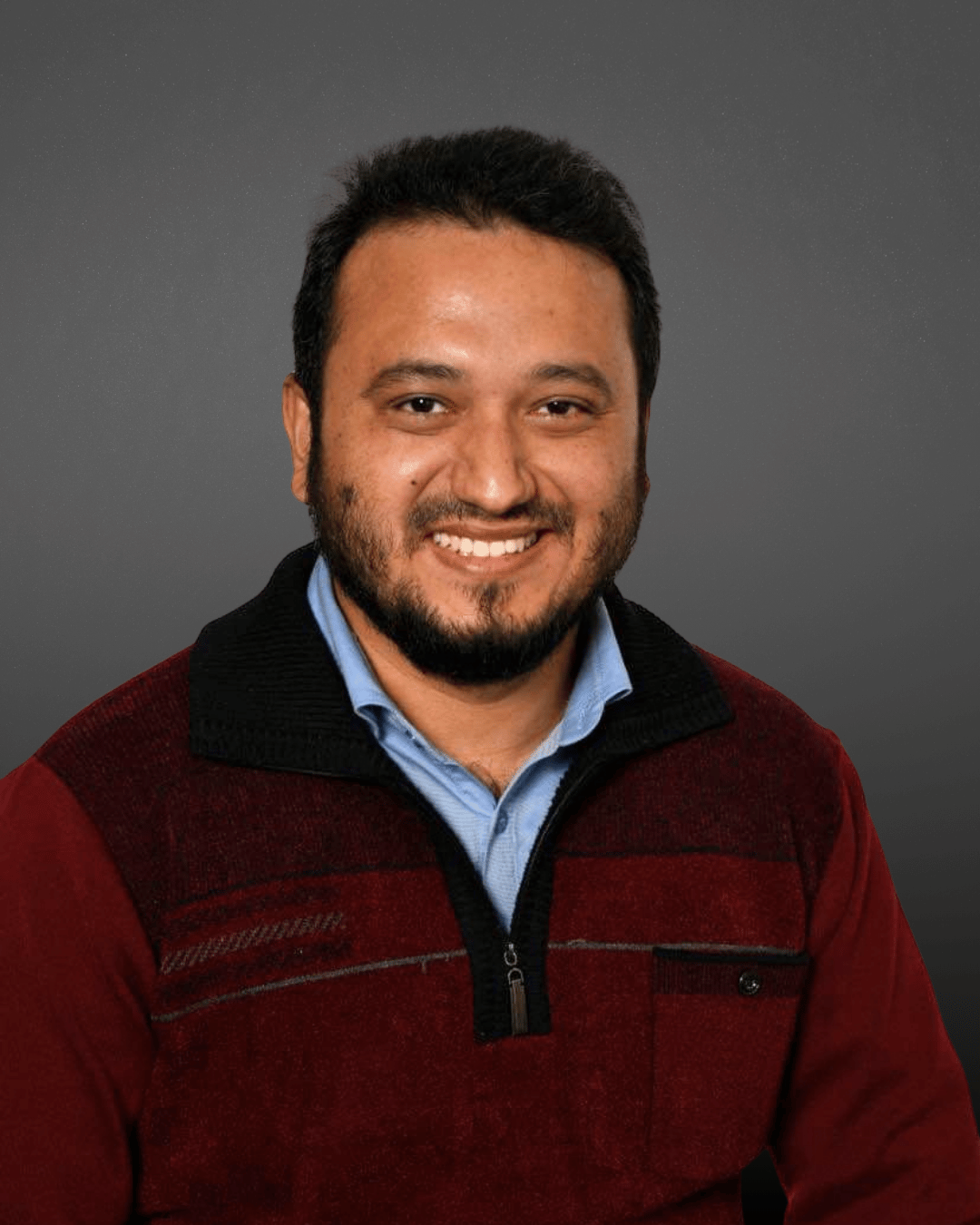
Dewan Mohammad Enamul Haque, LSU Department of Geology & Geophysics
A doctoral journey rarely follows a straight line.
For Dewan Mohammad Enamul Haque, a graduate student in LSU's Department of Geology & Geophysics, the path from the University of Dhaka in Bangladesh to LSU has crossed disciplines, continents and even planets. Along the way, he has learned new computational tools, pursued research across Earth and planetary science, navigated setbacks and secured more than $300,000 in scholarships, grants, fellowships and awards to support his doctoral studies.
But Haque does not view those awards simply as a measure of financial success. Each one represents someone willing to invest in his ideas and development as a scientist.
“I feel extremely fortunate and grateful for that level of support,” Haque said. “But I rarely think about this support simply as a dollar amount. To me, each award represents an organization, institution, or group of people who saw potential in an idea I proposed, in my research efforts, or in the scientist I was trying to become.”
A journey built on curiosity
Haque came to LSU from Bangladesh, where he is a faculty member at the University of Dhaka. He was looking for a doctoral program where he could strengthen his expertise in geology, geophysics and computational geoscience while pursuing research with real-world applications.
“I arrived at LSU with a clear purpose: to develop scientific expertise that could benefit both my home country and the broader scientific community,” Haque said.
His dissertation now examines geohazard processes across Earth, Mars and the Moon, combining observations, numerical simulations and high-performance computing.
On Earth, his research examines environmental and geohazard processes in southeastern Bangladesh, including how rapid landscape changes have affected hillslopes, drainage systems and erosion patterns. He also studies earthquake hazards in Bangladesh and the Indo-Burma subduction system.
Beyond Earth, Haque uses seismic observations from NASA's InSight mission to Mars and the Apollo missions to the Moon to study marsquakes and moonquakes.
At first, Bangladesh, Mars and the Moon may seem like completely different research areas. For Haque, they share a common goal: using observations and computational models to understand geohazard processes that scientists cannot directly observe.
Learning through setbacks
Haque's interdisciplinary research has required him to continually learn new skills, from remote sensing and geodesy to seismology, landscape evolution, numerical modeling and data science.
He did not arrive at LSU knowing how to do all of it.
“There were many moments when a model did not work, code failed, an approach had to be reconsidered, or I discovered that answering one scientific question required learning an entirely new method,” Haque said.
Instead of viewing those moments as failures, he learned to treat them as opportunities to identify what he needed to learn next.
His doctoral journey, he said, has been a process of “identifying gaps, learning, sometimes failing, recovering, adapting, and moving forward.”
That mindset pushed him beyond his regular coursework and research. He participated in 27 funded conferences, workshops, training programs and hackathons, gaining experience with high-performance and cloud computing, artificial intelligence, data science and open-science practices.
Turning an idea into an opportunity
One of Haque's biggest milestones came when he secured a NASA FINESST grant, making him the only graduate student in his department to secure his own grant.
The process required him to develop a research proposal around a scientific problem, establish a hypothesis and methodology, demonstrate feasibility and explain how the project could advance science.
Working with his advisor and grant principal investigator, Suniti Karunatillake, associate professor of geology and geophysics, helped Haque strengthen the proposal while developing ownership of the project.
Receiving the award was about more than funding.
“An idea I developed as a graduate student had passed NASA's competitive review process and was considered worthy of investment,” Haque said. “Becoming a NASA Future Investigator gave me a new level of confidence, but also a greater sense of responsibility as a researcher.”
The experience taught him that a strong research idea is only the beginning. Scientists must also learn how to communicate that idea clearly and convincingly.
More than a dissertation
The scholarships, grants and fellowships Haque has received have allowed him to attend conferences, workshops and training programs while expanding his technical and professional skills.
The LSU Dissertation Year Fellowship is now helping him bring years of research together as he works toward completing his dissertation.
Haque credits his advisors, Karunatillake and Juan M. Lorenzo, professor and Ernest & Alice Neal Professor in Geology & Geophysics, with providing both scientific guidance and the freedom to explore.
“One thing my Ph.D. has taught me is that although a dissertation ultimately carries one student's name, the journey behind it is never accomplished alone,” Haque said.
He has also worked to give back through mentoring, outreach and professional service. He has mentored students through the Geological Society of America, judged student research competitions, volunteered with first-time presenters at the American Geophysical Union Fall Meeting and contributed to LSU's Kids Geology Summer Camp.
The advice to apply
Not every scholarship, fellowship or grant application Haque submitted resulted in an award. Rejection became part of the process.
Over time, he learned that even an unsuccessful application can sharpen a research question and teach a scientist how to communicate its importance.
His advice to other graduate students is simple.
“Apply. Please don't reject yourself before reviewers even have the opportunity to consider you, your work, or your potential.”
Haque also encourages students not to wait until they feel completely ready.
“Sometimes you have to put yourself out there first and then grow into the opportunity,” he said.
Looking back, the most rewarding part of his doctoral journey is not any single grant or fellowship. It is seeing how much he has grown.
He arrived at LSU with knowledge gaps to fill. Over time, he learned from scientists across disciplines, developed increasingly sophisticated computational skills and moved from learning established methods to developing and pursuing his own research questions.
“Seeing that transformation in myself has probably been the most rewarding part of my doctoral journey,” he said.
For Haque, the journey is still unfolding. But each grant, setback, new skill and
research question has moved him closer to becoming the independent scientist he set
out to become.